

What We've Learned From 24,000 Gutter Jobs Across Northern Colorado
Are Gutter Guards Worth It? Here's What 23 Years of Gutter Installations Actually Shows
If you’re researching gutter guards and wondering whether they actually deliver on their promise, you’re asking the right question. After more than two decades of installing, repairing, and maintaining gutters across Northern Colorado, the team at C&S Rain Gutters has a clear, field-tested answer, and it’s not the one most product websites will give you.
The Short Answer:
Yes, But It Depends on These Three Things
Gutter guards are worth it for most Northern Colorado homeowners, but the value depends on three specific factors: the type of guard you choose, the type of debris your home is surrounded by, and whether the system is professionally installed. Get all three right, and a quality gutter guard system can reduce your cleaning frequency from two or three times per year down to once every few years. Get any one of them wrong, and you may spend more fixing the problem than you would have spent on regular cleanings.
That answer comes directly from field experience. C&S Rain Gutters has completed over 24,000 gutter jobs across Northern Colorado, installations, replacements, repairs, and guard systems on everything from single-family homes to commercial buildings and schools. This is an honest assessment from a company that sees the results up close, long after installation day, not a product review or a manufacturer’s guide.
What Gutter Guards Actually Do, and What They Don't
The core function of a gutter guard is straightforward: it covers the open channel of your gutter and blocks large debris from entering while allowing water to flow through. Done well, this reduces the frequency of clogs, cuts down on how often gutters need to be cleaned, and reduces the risk of water damage to your fascia, foundation, and landscaping.
But no gutter guard eliminates maintenance entirely. Fine debris, cottonwood seeds, shingle grit, small pine needles, can still make its way past lower-quality guard systems and accumulate inside the gutter channel over time. A quality guard dramatically reduces this problem; it does not erase it. Expect to have your gutters inspected annually regardless of what type of guard is installed.
One detail that matters specifically in Northern Colorado: improperly installed gutter guards can create new problems in winter. If a guard is not fitted correctly, it can allow water to pool behind or under it. When temperatures drop below freezing, that pooled water turns to ice. In a climate where freeze-thaw cycles happen repeatedly from October through April, this is a meaningful risk. Professional installation is what separates a guard system that performs from one that causes the very problems it was supposed to prevent.
The Main Types of Gutter Guards: How They Compare
Micro-Mesh Gutter Guards
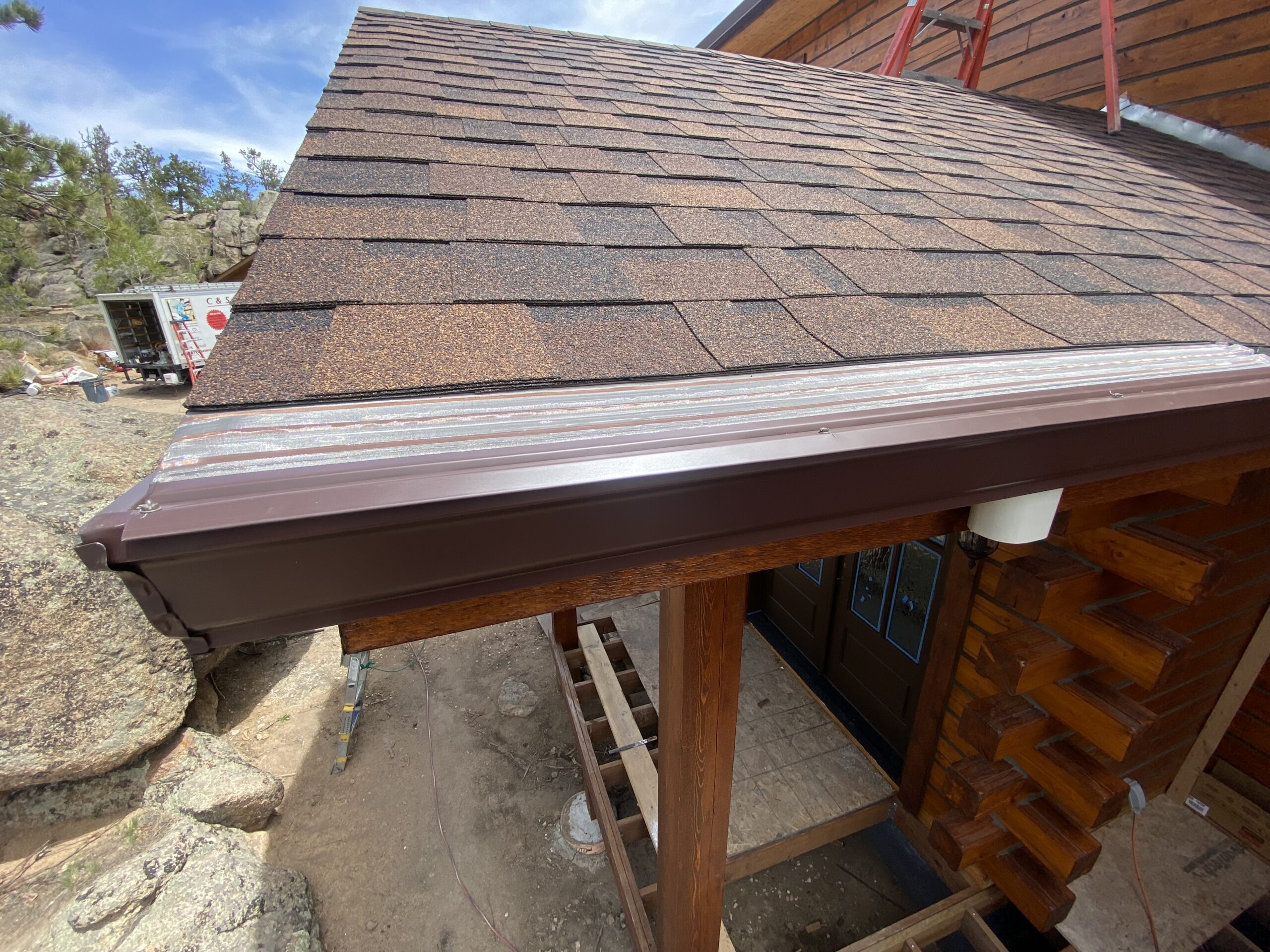
Micro-mesh guards are the most effective option available for most homes in the C&S service area. A fine stainless steel mesh with openings smaller than 50 microns sits over the gutter opening, allowing water through while blocking even fine debris like pine needles and cottonwood seeds. These are the two most common and problematic debris types in Northern Colorado, and micro-mesh handles both better than any other guard type.
The upside: dramatically reduced cleaning frequency and reliable long-term performance. The tradeoff: higher upfront installation cost compared to screen or foam alternatives. For homeowners with moderate to heavy tree coverage, the investment typically pays off within a few years. Quality micro-mesh systems can last 10 to 20 years with proper installation and occasional inspection.
Reverse Curve and Surface Tension Guards
Reverse curve guards work on the principle that water clings to a curved surface and flows into the gutter while debris falls off the edge. They perform well against large leaf debris and are a durable option in the right environment.
The limitation in Northern Colorado is rain intensity. During heavy rain events common on the Front Range, water volume can exceed the guard's flow capacity, causing water to overshoot the gutter entirely rather than follow the curve inward. For homes in lower-debris environments with moderate rainfall exposure, they can be a reasonable choice. For homes in higher-rainfall zones or with significant fine debris, micro-mesh is a better fit.
Screen and Foam Guards
Screen guards are the most widely available and lowest-cost option. They reduce large debris entry but allow smaller debris through, which means pine needles and cottonwood seeds, common throughout Northern Colorado, can still clog your gutters. They are not a poor choice in every situation. Homes surrounded exclusively by large deciduous trees and minimal fine debris can see reasonable results from a quality screen guard.
Foam inserts are a different story. The foam sits inside the gutter and allows water to absorb through while debris sits on top. In theory, this sounds effective. In practice, debris accumulates in the foam and decomposes, and the material itself can harbor mold in Colorado's variable humidity conditions. The team at C&S Rain Gutters does not recommend foam inserts for most Northern Colorado homes.
Brush Guards
Brush guards are circular bristle inserts that sit inside the gutter channel. The intention is that debris catches on the bristles while water flows around them. The reality is that debris becomes embedded in the bristles, decomposes inside the gutter, and creates the same clog problem the guard was supposed to prevent, just harder to clean. Brush guards are not a system C&S Rain Gutters recommends. If you're comparing options ahead of a free estimate, this one is worth crossing off the list early.
If you're ready to talk through which guard type makes sense for your specific home and tree coverage, get a free estimate from the C&S Rain Gutters team and we can usually give you a number on the first call.
Are Gutter Guards Worth It in Colorado Specifically?
Cottonwood trees are everywhere in Northern Colorado, and they shed cotton in late May through June. The cotton itself is not heavy, it floats on air, but it accumulates quickly in gutters and on lower-quality guard surfaces. Standard screen guards are not designed to stop material this fine. Only micro-mesh guards with openings under 50 microns reliably block cottonwood seeds before they reach the gutter channel. If your property is near cottonwood trees or in a neighborhood with heavy cottonwood coverage, this factor alone should inform your guard selection.
Pine needles are the other recurring challenge. They fall in quantity from Ponderosa pines and other conifers common across the Front Range foothills and in residential plantings throughout Greeley, Fort Collins, Loveland, and surrounding communities. Pine needles slip through standard screen guards with ease. Micro-mesh stops them. It’s a simple but important distinction.
Freeze-thaw cycles add a layer of urgency to keeping gutters clear that homeowners in warmer climates simply don’t face. Northern Colorado temperatures cycle above and below freezing repeatedly from October through April. Gutters packed with debris and ice can pull away from the fascia board under the weight, back water up under roofing, and contribute to ice dam formation along the roofline. Gutter guards that reduce debris buildup directly reduce this risk. As noted earlier, the installation quality of the guard itself matters here, a guard that traps water rather than channeling it will create ice problems of its own.
Colorado’s Front Range is also one of the most hail-active regions in the country. Significant hail can dent aluminum guard material and compromise the fit of the guard over time, which is worth considering when selecting guard material and discussing with your installer. Heavy snow accumulation is a related concern, clip-mounted guard systems that are not designed for snow load can shift or bend under the weight of wet snow, particularly in Northern Front Range areas that see significant accumulation.
Each of these factors narrows the field toward professionally installed micro-mesh systems for most Northern Colorado homeowners. That’s what the data from 24,000 jobs in this specific climate actually supports.
What Do Gutter Guards Cost, and What Do They Save?
Cost is the most common hesitation, and it’s a fair one. Gutter guard systems vary in price based on guard type, the linear footage of your gutters, and the condition of the existing system. Micro-mesh systems cost more upfront than screen alternatives. The gap is real, and it matters to a household budget.
The better frame for that cost is what you’re replacing. Professional gutter cleaning in Northern Colorado typically runs between $100 and $300 per service visit, and most homes with meaningful tree coverage need cleaning two to three times per year. That’s $200 to $900 annually in recurring maintenance costs, not counting the times a clog causes actual water damage to your fascia, soffit, foundation, or landscaping. A professionally installed micro-mesh system that holds up for 15 or more years represents a straightforward trade of upfront cost for long-term savings and reduced risk.
C&S Rain Gutters offers free estimates and can often give you a specific number on the first phone call. There’s no cost to finding out what a guard system would actually run for your home, and knowing that number is the only way to make a real cost comparison.








When Gutter Guards Are NOT Worth It
If your home has minimal tree coverage and you’re already comfortable with twice-yearly cleaning, the ROI case for guards is weak. The system would cost more than it saves over a reasonable time horizon.
If your gutters are in poor condition, sagging, leaking, pulling away from the fascia, installing guards on them is money wasted. The underlying system needs to be repaired or replaced first. Guards on failing gutters don’t protect anything; they just add cost to a system that’s already underperforming.
If you’re drawn to a very low-cost guard option because it fits the budget, consider whether the math actually works. A foam or low-grade screen guard that doesn’t perform in Northern Colorado’s debris environment will still require regular cleanings, meaning you’ve paid for a guard and the cleaning service.
The team at C&S Rain Gutters has been installing gutters for over 23 years. Sometimes the honest answer is that a gutter guard isn’t the right next step for a particular home. We’ll tell you that when we do your free estimate. That’s what a company that’s been in one market for two decades does: it gives you the real answer, not just the one that results in a sale.
Frequently Asked Questions
Do gutter guards really work, or are they a waste of money?
Do gutter guards work with pine needles and cottonwood seeds?
How much do gutter guards cost to install in Northern Colorado?
Do gutter guards prevent ice dams?
How often do gutters still need to be cleaned if they have guards?
Are gutter guards worth it for a one-story home?
What gutter guard is best for gutter guards near me in Northern Colorado?
What Homeowners Say
We’ve been lucky enough to serve hundreds of homeowners across Northern Colorado, and their kind words mean everything to us. Real reviews from real neighbors we’ll let them do the talking.
Posted on Google
 Jay Burgess
Trustindex verifies that the original source of the review is Google.
Abel and his crew did a great job repairing our gutters! I highly recommend C&S Gutters. They are honest, timely, and do great work!Posted on Google Justin SecrestGreat experience overall. Luis and the team at C&S were a pleasure to work with. From bidding, scheduling, execution, and most importantly communication I could not have asked for a better gutter installation experience. I highly recommend.Posted on Google
 Michel ParisI contacted A&S for gutter cleaning. I received a quick response from Abel and luckily, he was able to send a team that same afternoon. The team was very respectful, polite and did their job quickly. I really recommend A&S Rain Gutters MariePosted on Google
 Margot StarkExcellent install of seamless gutters. My team, consisting of Oscar, Omar and Eduhrdo worked overtime to install all gutters and fix a particularly difficult blocked drain.Posted on Google
 Heather OrtizThey were amazing! The house and our shop gutters were done in a day.Posted on Google
 JohnGreat price and amazing service. Had them install facias and gutters during our house painting. Very easy to schedule and work around the painters. Followup changes by me were handled fast. Would highly recommendPosted on Google
 Colorado Cleaning ProfessionalsAbel and the team are honest and professional their work is quality thank you so much Abel I will be recommending to my friends and family. They have any size and color of gutter you can think of many more styles than the competition. Thank you Abel and team.Posted on Google
 Judy PursleyVery satisfied with C & S Rain Gutters. Abel Cisneros and his crew did a great job. He gave me choices & explained any questions I had beforehand. He was efficient & professional. His crew got the job done quickly, cleaned up all debris..very thorough job. Nice job at a great price. I would recommend C&S to anyone needing this project done right.
Get a Free Quote for Your Project
We’d love to hear from you. Whether you have a question, are ready to schedule a consultation, or just want to talk through your options, our team is here and happy to help. Reach out today we look forward to connecting.
(970) 353-3190
Contact Us